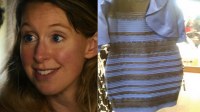
The other day, a friend of mine ignited a group chat with a nostalgic piece of viral social media content: the Blue/Black or White/Orange dress picture. If you don’t know what picture I’m talking about, welcome to the internet. #TheDress had a dominant 15 minutes of fame in 2015, as it engaged people in a mystifying two-sided argument:
“Clearly it’s black and blue.”
“No, *clearly* it’s white and orange.”
What’s true? What’s real?
Plenty of stories or photos have grabbed public attention over the digital era, but the ones that hold it the longest have sparked extended conversations. It’s fun to argue, and the most juicy arguments come from subjects with real nuance. The more shades of grey there are, the greater the diversity of opinion. The greater the diversity of opinion, the longer the conversation lasts.
Last month, Nathan Fielder’s You Can See Everything became a cultural phenomenon unlike any nonfiction film I can think of in the last 20 years– or any film, for that matter. It feels like it’s come up in almost every conversation I’ve had since its release. And I think the reason it’s so fun to discuss is because, just like #TheDress, it leaves you with a question that has two plausible answers:
“Is Elizabeth Holmes a remarkably manipulative scam artist, or a misunderstood and delusional victim?”
What’s true? What’s real?
The first time I watched the film, I intentionally came in pretty blind. I knew the basics of the Theranos story, and I’d seen Hulu’s The Dropout. I was confident that Elizabeth Holmes was thoroughly guilty, and expected Nathan to give us a good laugh at her expense, as he’s done for years in his other work. I left the theatre surprised at how much empathy I’d developed for “Liz”, and how much murkier the story felt to me. If forced to take a side, I would have leaned towards “misunderstood and delusional victim”. I thought maybe a combination of her past traumas (sexual abuse, multiple unhealthy adult relationships, and being at the center of an overwhelming series of unfortunate events at Theranos) had caused her to develop a protective shell of delusion, in which she had never done any wrong, and was incapable of processing certain realities. I mean, the film certainly made that seem possible, right?
As audiences everywhere have, I discussed my takeaway with anyone I could. Some people agreed with me, others disagreed. The dissenting opinions that I found most interesting were “the scoffs”.
“Oh man, she got you too…Of course she’s lying…Didn’t you do *any* research of your own?”
The idea of being duped by a charade didn’t sit well with me, so I did a bit of brushing up on some of the details of the Theranos scandal. My perspective shifted quickly as I read the reactions of the whistleblowers and reporters that broke the scandal, and recalled all the hard examples of how the company, and Holmes herself, committed undeniable acts of fraud. What was more compelling to me than the numbers and “facts”, however, were the remarks at how Holmes behaved in the movie. People like Tyler Schultz, a Theranos whistleblower and family friend who knew her well, described her performance in the film as “almost unrecognizable”.
I went to see the film again, this time with some more hardened skepticism. As a result, I left the theatre with a much different opinion. Things didn’t seem nearly as grey or murky.
This is what I think actually happened.
Let’s start with Liz and Billy. It’s evident that the two of them live in a reality in which Liz isn’t nearly as guilty as the world thinks she is. A few months shy of her sentence, I think Billy had an idea:
“Could we manipulate public opinion if given enough exposure?”
And I do think Billy was the mastermind here. Throughout the film it becomes clear that he completely dominates their relationship (to a concerning degree). It’s unclear to me whether Billy’s endgame was to exonerate Liz, or to salvage enough of her reputation that he could leverage her association and likeness for his own gain. Regardless of the ends, the means were:
1. prepare an impenetrable story

2. deliver some compelling propaganda built around that story
1) The Story:
Liz’s lines
“I never *lied*.  I believed the things I said.”

“I never cared about money.  I never sold a share.  I really believe in this.  I’m not making any money off of
this movie.”

“I tried to communicate clearly, but people misunderstood me.”

“The technology works.  There’s no proof that the technology doesn’t work.”

“I never wanted attention.  Other people made me do all that publicity.”

“My partners get their hands dirty in ways I don’t.  I have no part of those things.”
Billy’s lines
“We’re so in love, and just such a loving family in general.  We have family and friends that love us, just like anyone else.”

“Liz has 100% trust in me to speak and make decisions for her.”
2) The Delivery
I think the core strategy, above all else, was to stick to the story. This would explain why Liz and Billy appear so weird and robotic during the movie–they’re constantly focused on delivering their lines. It feels like they erased their own personalities in favor of a “chat bot” they created. If the conversation deviates from the programmed script, the bot either shuts down or offers a default response like “I don’t know/remember”, or says something vague or deflecting or nonsensical. And it’s remarkable how effective the strategy is. To be uncompromisingly committed to a story, even a lie, is hypnotic.
There are moments when the hypnosis falters, though. It’s apparent to me that Billy had a vision for how he wanted the project to go, and he gets visibly frustrated when things deviate from his vision. If Nathan asks a tough question, or doesn’t film a staged scene that Billy suggests, he storms off. As the project goes on, I think Billy starts to realize he’s lost control of its direction, and that it could actually backfire. As a result, he becomes progressively more hostile to the filmmakers, and towards the end of the film he pleads with Nathan over the phone that “if you put this out, [Liz] is going to get torn apart.”
But Billy’s fears didn’t come to fruition. The film is not a clear indictment of Liz. So what happened?
Let’s look at the Nathan side of the equation.
I think Nathan’s intention at the beginning of the project was to make a comedic show of Liz’s guilt. This lines up with the first act of the film. He starts by laying out the case against her, and he pushes it in their early conversations. He plays along, at points, to placate Billy and Liz, assumedly because he sensed that being too interrogative would antagonize Billy and lead to them shutting the project down. He says things like (and I’m paraphrasing here):
“Maybe there was a misunderstanding…maybe you do just think differently.”

“You give me so much access, and you still are pursuing Theranos.  It’s almost like you actually do have nothing to hide.”

“The only thing I really have to go off of is you.”
Then Liz goes off to prison and there’s a 2-year gap in filming. I think this gap was key to finding the film’s final shape. Nathan has 2 whole years to review what they’d amassed, and decide how to best narrativize it. And I think as he watched it back, he saw an opportunity. He realized that if he plays far enough into the story that Liz and Billy are pushing, he can turn what was going to be an entertaining, but culturally transient, exposé into a captivating and transcendent conspiracy theory. The world already thought Elizabeth Holmes was guilty. Affirming that perception wouldn’t be nearly as fascinating as sewing doubt in an air-tight case. This choice was a stroke of storytelling genius.
His second stroke of genius was bringing Amanda Seyfried aboard. Amanda enhances the film’s second act in many ways. Aside from the novelty of her celebrity, her role as Nathan’s sidekick transforms the film from a satirical documentary into what feels like a “Buddy Cop Comedy” mixed with a classic “Detective Noir Drama”. Nathan also casts her as the audience’s proxy. So many of Amanda’s candid reactions and questions feel like they’re coming from straight out of our heads. She’s our voice. Our perception is her perception.
But more importantly, her perception becomes our perception. Over their last few scenes together, and especially in the last scene by the fireplace, Nathan tries to pick at Amanda’s certainty and campaigns that Holmes deserves sympathy. He builds off of the lines he parroted in the film’s first act, offering that “it felt like she was being sincere”. He actively corroborates Liz and Billy’s narrative. He relays Liz’s sentiment that Amanda’s portrayal of her in The Dropout was a violation of feminine solidarity, and he advocates that the love Liz has for Billy is pure. Both points serve to deflect the conversation away from Theranos, and to reframe Holmes as a victim rather than a villain. And it’s effective.
But in that last scene, Amanda calls him on it. I understand why some people have speculated that the exchange was semi-scripted, but I don’t think it was. I think Amanda starts to catch on to Nathan’s nudges, but instead of accusing him of influencing the film’s narrative for the sake of storytelling, she suggests that maybe he’s fallen victim to Liz’s hypnotism, like so many other characters of the Theranos ordeal. And it’s the perfect final note in Nathan’s overture. It perfectly stages the question he wants audiences to leave with:
“Is she a villain or a victim?”

“Does Nathan have sympathy for her because she manipulated him, or because he recognized that she really does deserve sympathy?”
Without Amanda explicitly calling it out, I don’t think the question would have been as clear to the audience as the credits rolled. I don’t think Nathan actually caught feelings, I think he played a character in a story he orchestrated.
Like #TheDress, I think we’ll see memes, clips and references to You Can See Everything pop up in group chats for decades to come. And it’s not because of the film’s beautiful cinematography, or the fascinating way it blends and traverses genres, or its remarkable level of access to a public figure. Nathan’s masterpiece will stand the test of time because he was wise enough to take an open and shut case, and open it back up again. Kudos, Mr Fielder.



Leave a Reply